
The summer of 2026 in St. Petersburg has been marked by the ballet evenings of the Stars of the White Nights Festival. One of these, on June 23, took place at the Mariinsky Concert Hall and featured a rich selection of performances in the Ballet Gala. From the very first notes of the orchestra conducted by Boris Gruzin, an eveing that blended youth and experience, classical masterpieces and contemporary choreography, allusions and impressions, began.
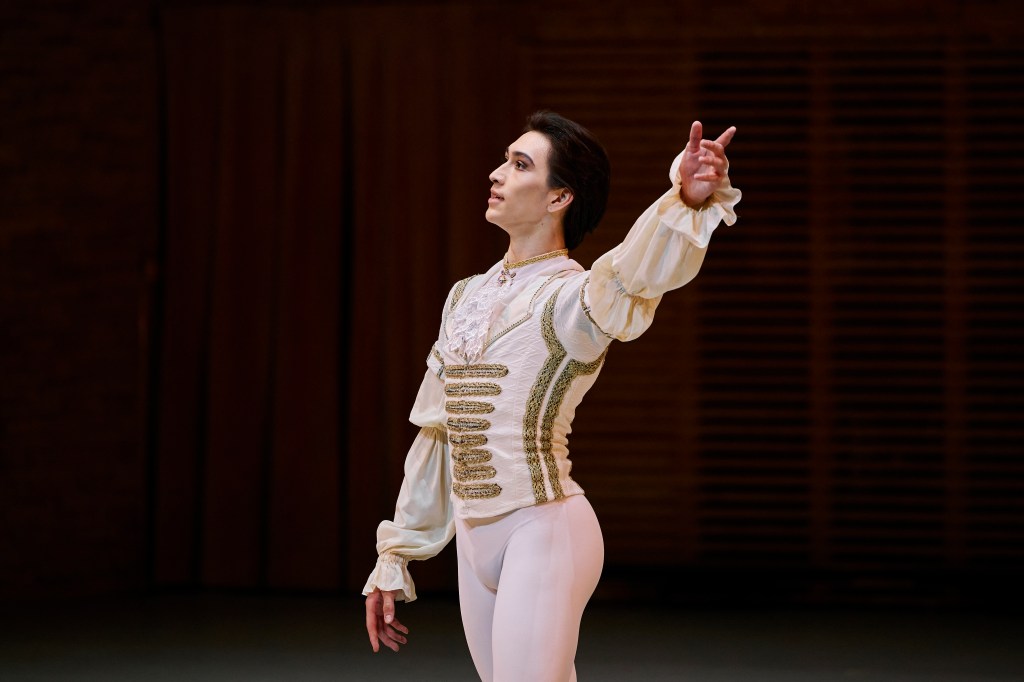
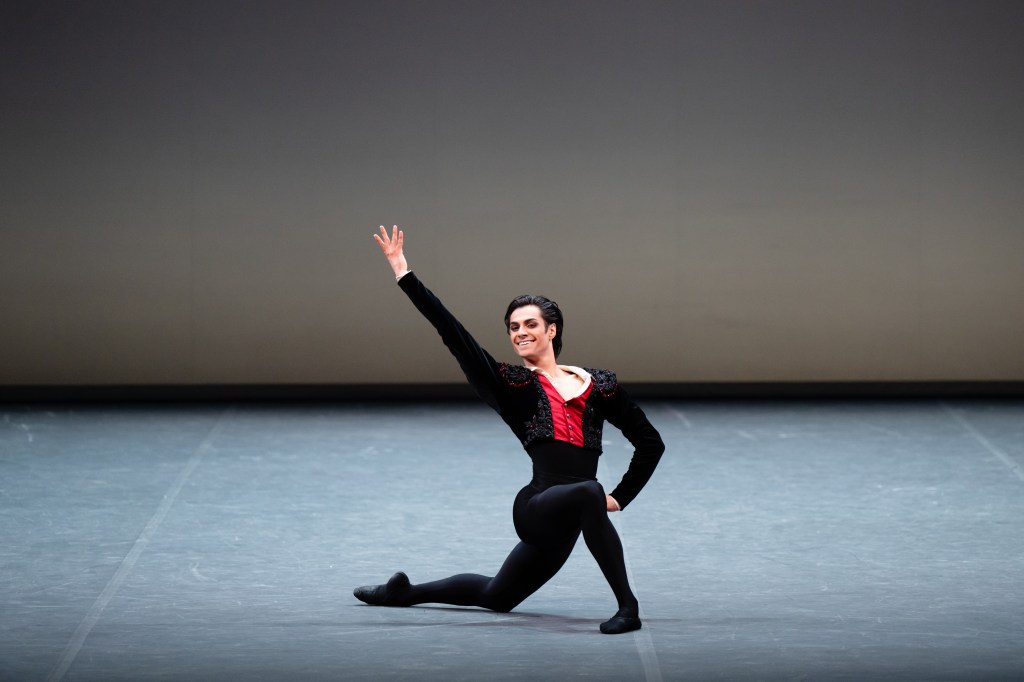
Ryoma Hudzeleu. Photos by Mikhail Vilchuk (2026) © Mariinsky Theatre
Just before the Moscow International Ballet Competition, Ryoma Hudzeleu’s debut with Camilla Mazzi in the pas de deux from The Sleeping Beauty was intriguing: confident cabrioles, a pirouette without slowing the tempo, a vibrant grand jeté en tournant, and, despite his first attempts at the role of Désiré, the young soloist proved himself a gallant partner. Despite having the role of Aurora in her repertoire, Mazzi felt unsure.
Hudzeleu’s presentation of the contemporary choreography also looked interesting: a solo from the ballet Curtain by Vyacheslav Samodurov to the music by Darius Milhaud was brief, but demonstrated the dancer’s temperament and flexibility.
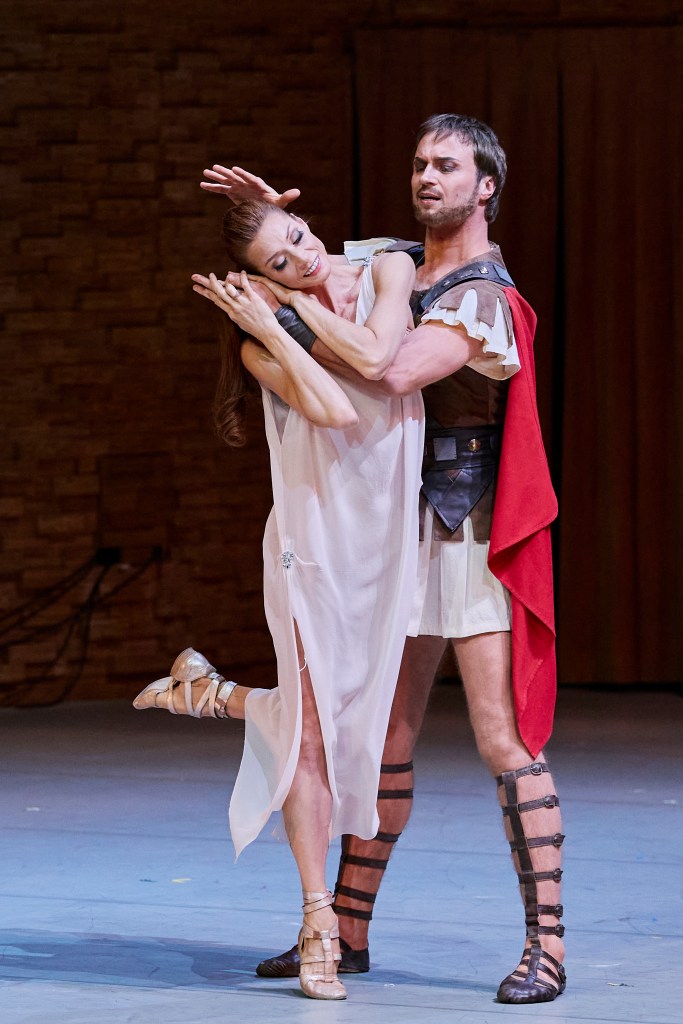
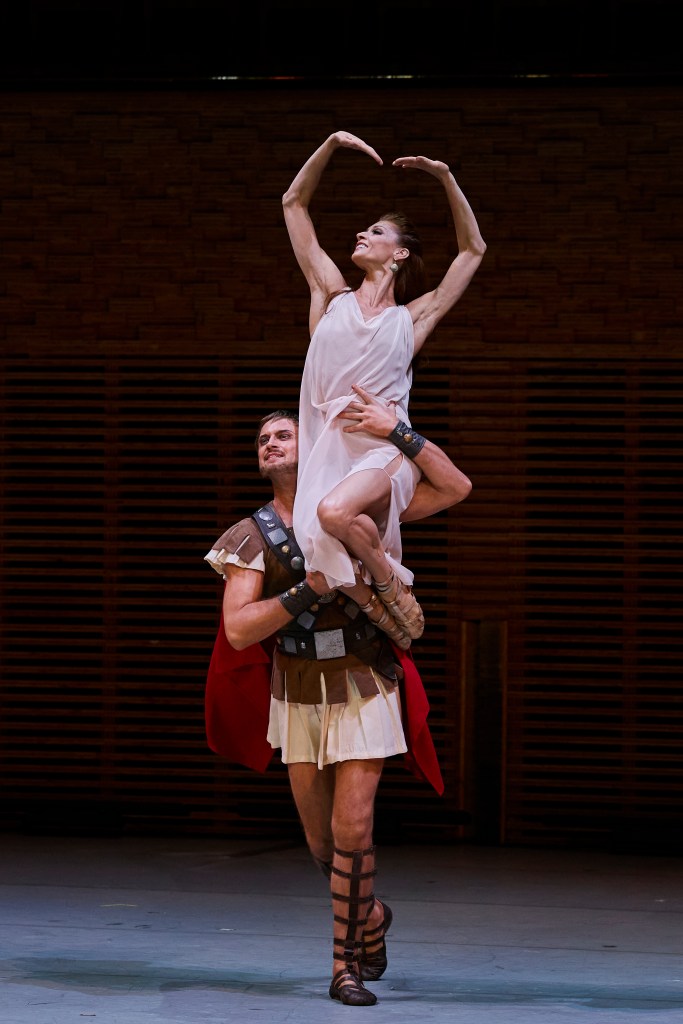
Ekaterina Kondaurova and Andrey Yermakov. Ballet Gala. Photos by Mikhail Vilchuk (2026) © Mariinsky Theatre
The programme continued with Leonid Yakobson’s Spartacus Adagio, performed by Ekaterina Kondaurova and Andrey Yermakov. It impressed with its passion and profound understanding of the tragedy. Kondaurova’s Phrygia was unstoppable, seemingly oblivious to the order of her movements, living onstage with the character, who sensed disaster. Yermakov’s noble and restrained Spartacus balanced Phrygia, forming a harmonious duet.
The Balcony Pas de Deux from Romeo and Juliet by Maria Shirinkina and Roman Malyshev was both elegant and touching. A light, delicate Juliet, at once stable and fluid, and her Romeo, an attentive and reliable partner, formed a seamless interaction on stage.
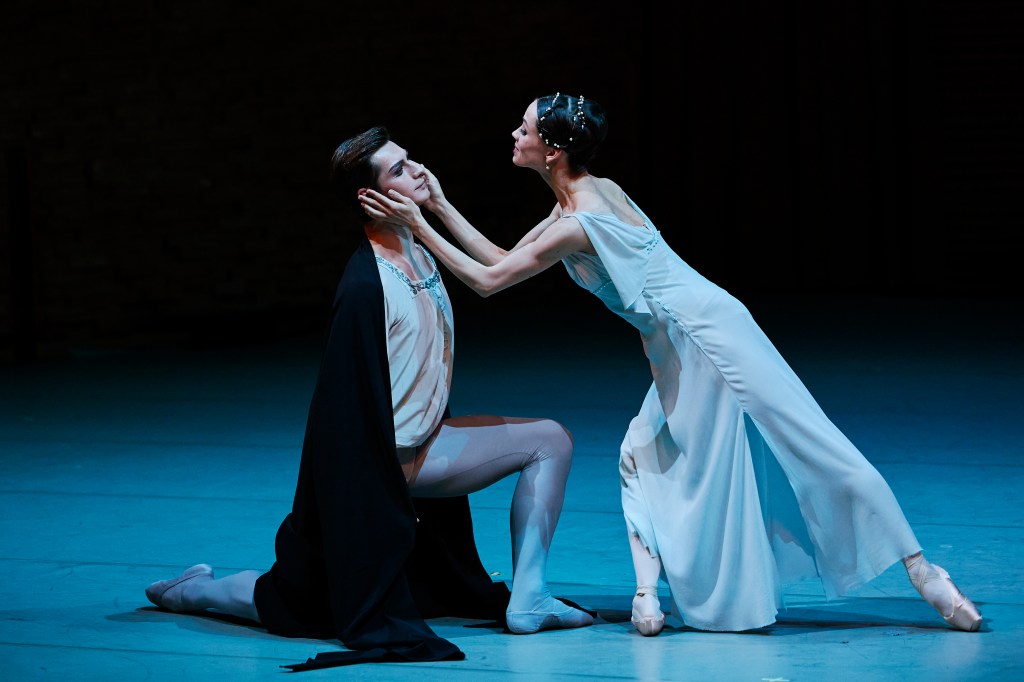
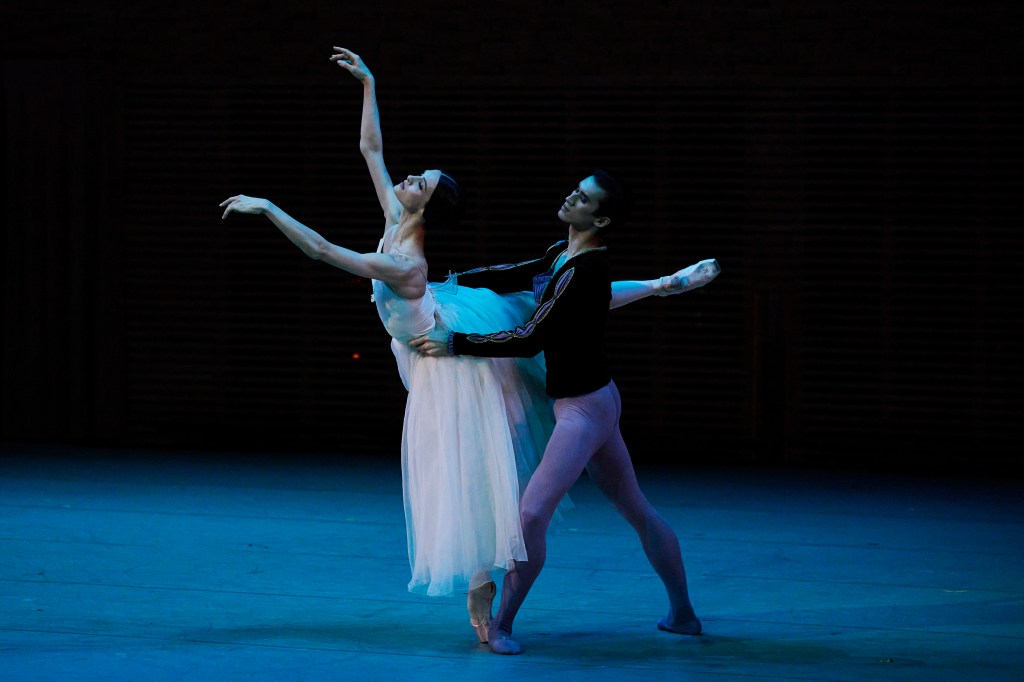
Maria Shirinkina and Roman Malyshev | Kristina Shapran and Kian Manghise. Ballet Gala. Photos by Mikhail Vilchuk (2026) © Mariinsky Theatre
The mood of Giselle Adagio by Kristina Shapran and Kian Manghise can be described as hypnotic. Beautiful lines, grace and precise and musical port de bras, make Giselle Shapran simultaneously tender and ethereal. Manghise, in excellent shape and proving himself a reliable partner, portrayed his Albrecht as repentant and resigned to the will of the girl he deceived.
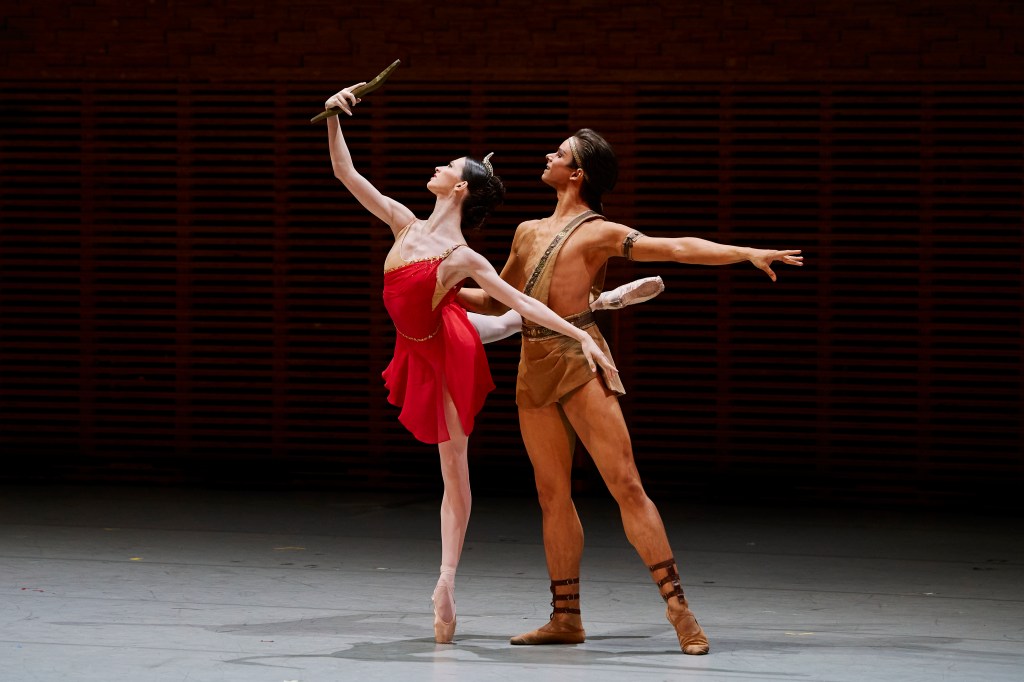
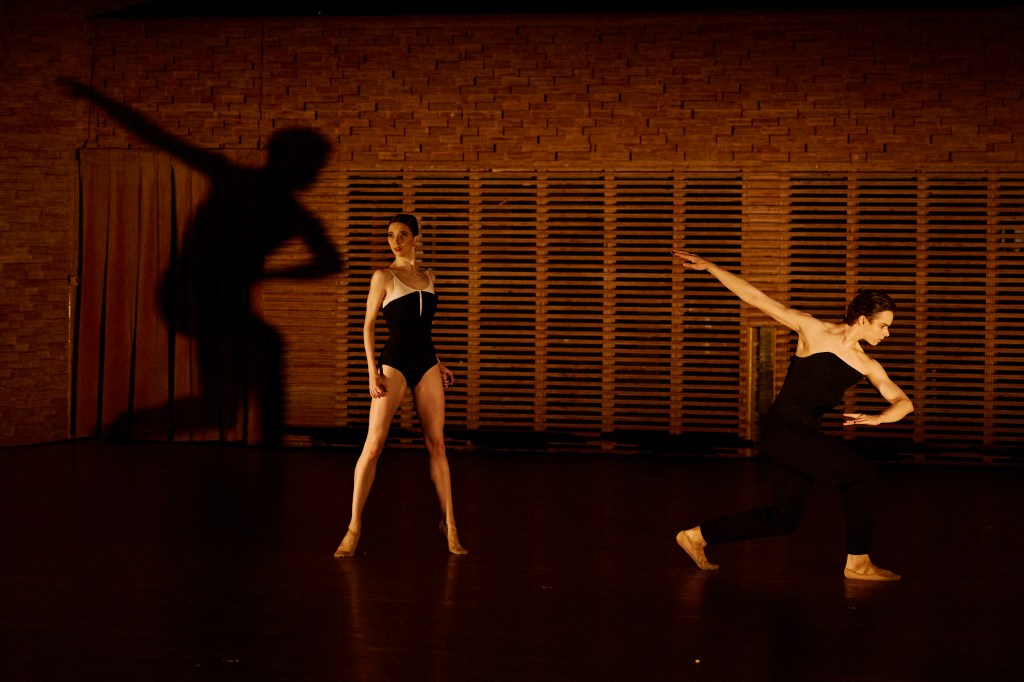
Yana Peneva and Alexei Orohovsky. Ballet Gala. Photos by Mikhail Vilchuk (2026) © Mariinsky Theatre
Two duets, Diane and Acteon’s pas de deux from the Esmeralda ballet and the Duet choreographed by Vyacheslav Samodurov, performed by young Yana Peneva and Alexei Orohovsky, also ahead of the Moscow Ballet Competition, looked stylish.
The pas de deux of Diane and Acteon highlighted Peneva’s energetic fouettés, light jumps and precise footwork. For Orohovsky, it proved a demanding test of endurance, and his commitment and power carried him through the choreography. The performance was marked by focus and athleticism. Their presentation promises further refinement as the young duo continues to grow into the roles.
Vyacheslav Samodurov’s choreography to the music of Henry Purcell suits Peneva very well. In this contemporary duet, she takes the lead alongside Orohovsky, her regular partner, with whom she shares an intuitive understanding.
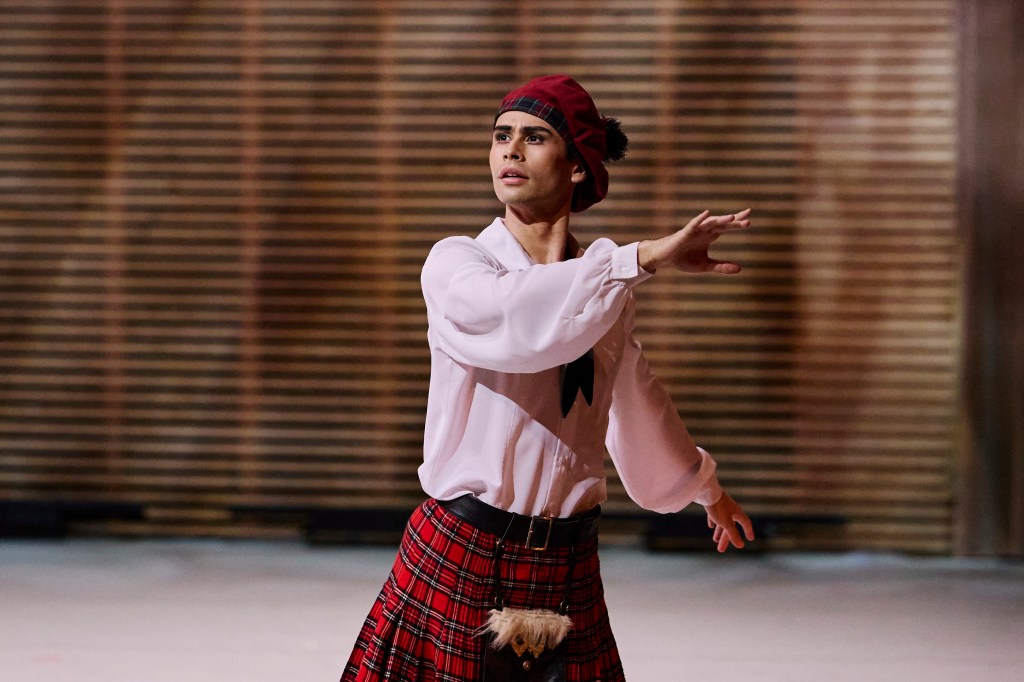
Aaron Osawa-Horowitz. Ballet Gala. Photos by Mikhail Vilchuk (2026) © Mariinsky Theatre
The pas de deux from La Sylphide by Elena Evseeva and Aaron Osawa-Horowitz was captivating thanks to the vibrant and playful Sylphide and the light, youthful James, who seemingly fluttered across the stage alongside the heroine. The duet relied on buoyant jumps, delicate footwork, and fluid phrasing. Horowitz’s softness and ease in performing the elements are especially noteworthy.
The duet from Fokine’s Scheherazade, performed by Oksana Skorik and Anton Osetrov, was distinctly reminiscent of Leon Bakst’s illustrations, not only in its choreography but also in the dancers’ physical resemblance to Ida Rubinstein and Vaslav Nijinsky.
Skorik’s incredible flexibility and lines, combined with Osetrov’s soft, fluid movement and effortless leaps, created a fluid, undeniably passionate performance.
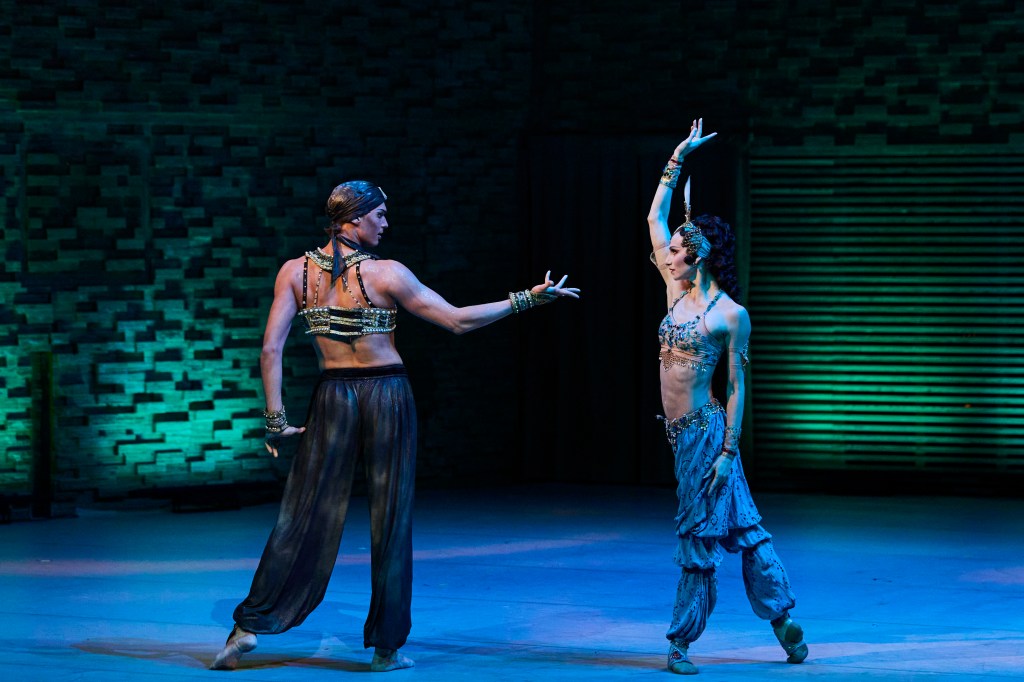
Oksana Skorik and Anton Osetrov. Ballet Gala. Photos by Mikhail Vilchuk (2026) © Mariinsky Theatre
The evening closed with the Pas de Deux from Don Quixote (Act III) by Elena Svinko and Evgeny Konovalov, with the variation by the young Veselina Ilieva. Svinko, whose technique is beyond doubt, delivered a charming, even coquettish Kitri, with confident fouettés, good footwork, and a steady tempo. Konovalov demonstrated a assured partnership. The duo matched technical brilliance with effortless charm, making the gala’s finale truly festive.
The Mariinsky Ballet Gala demonstrated that the company’s artistic continuity remains one of its greatest strengths, bringing together established artists, who continue to reveal new tints of their artistry, and a younger generation eager to demonstrate its potential in a programme celebrating both tradition and the promise of the future.
Text: Julia Sumzina
Photos: Mikhail Vilchuk (2026) © Mariinsky Theatre



Leave a Reply