
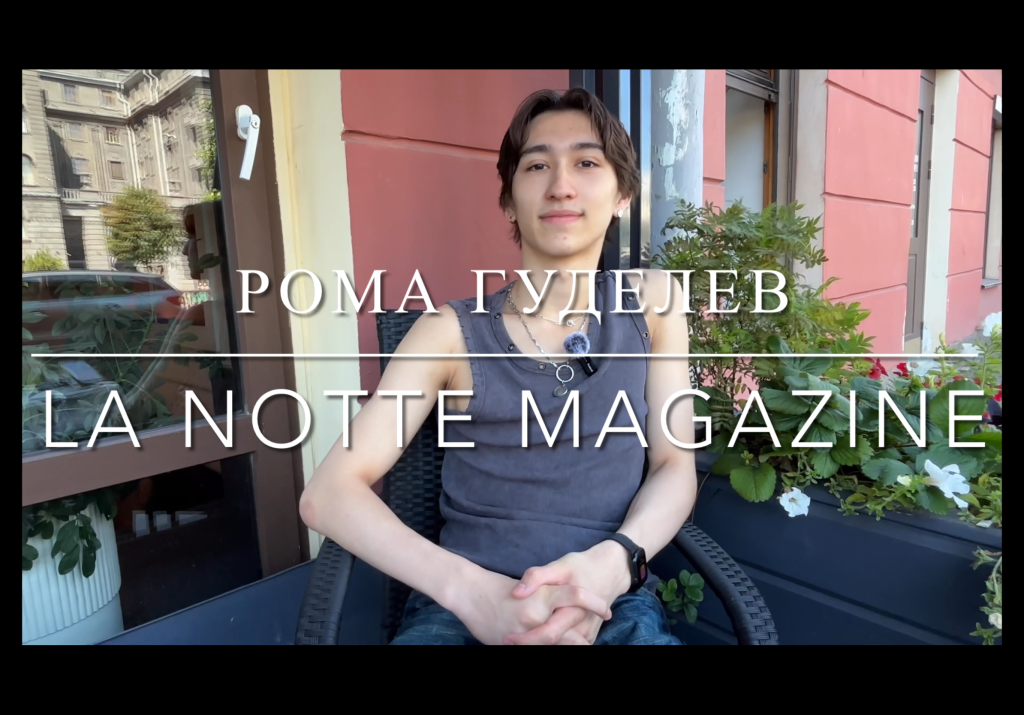
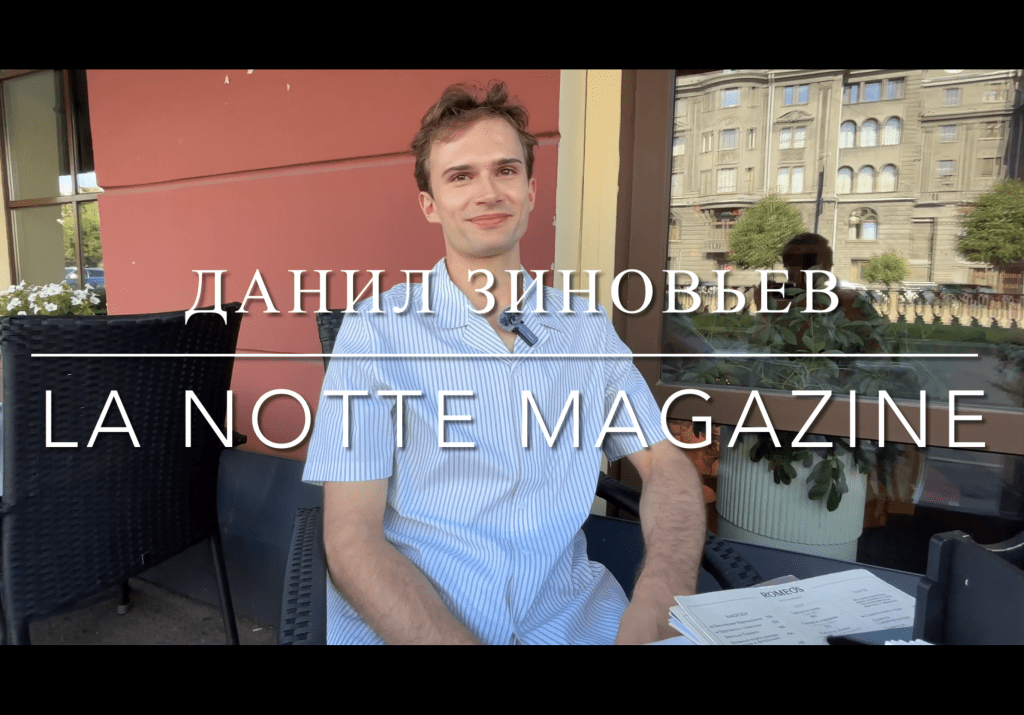
We spoke with Ryoma Hudzeleu immediately after his promotion to first soloist of the Mariinsky Theatre. The Russian version of our friendly conversation is available on video.
Today we’re talking with Mariinsky Ballet’s newly promoted First Soloist, Ryoma Hudzeleu. Ryoma, congratulations on your promotion! And, of course, on winning the Gold Medal at the 15th Moscow International Ballet Competition. Four years ago you took part in the competition and won the Silver Medal in the Junior Group. This time you won the Senior Group. Does this success feel different?
Thank you very much. Of course, it wasn’t easy, but this competition was more interesting for me than it was four years ago because this time I competed as a soloist and in the Senior Group.
The repertoire in the Senior Group is almost twice as big as in the Junior Group. And, of course, I didn’t have much time to prepare because I had so many performances and so many debuts at the theatre, like Lankendem, Basilio, and others. But it was a great experience.
We also rehearsed together with Yana and Alexei, who won Gold Medals in the Junior Group for duets. Four years ago I also competed together with several dancers from Belarus. I think this time it wasn’t easier, but it was more exciting.
At the theatre you work with Leonid Dmitrievich Sarafanov. What is the most valuable thing about working with him?
First of all, he was a great dancer. An amazing one. I think it’s fair to say he was the best dancer in the world.
He has so much experience. When we prepared Ali, Basilio, and other roles that he himself danced many times at the Mariinsky Theatre, he taught me many important details about those roles. It really helped me understand how to dance them.
He doesn’t like it when everyone dances the same way. He always wants to add something and make it his own. For example, I have an unusual diagonal and the variation at the end of Lankendem.
He created that for me because I have certain steps and jumps that suit me, and he came up with that combination especially for me. He always has some kind of surprise for the audience.
It’s really interesting to watch your work together.
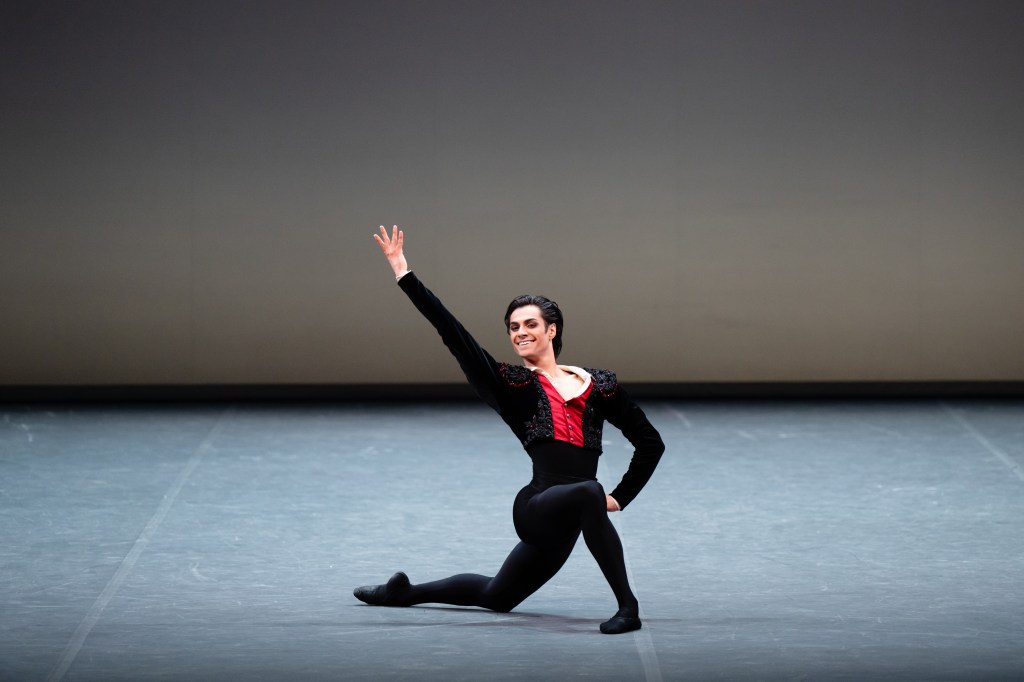
You competed with roles that are already in your repertoire: Ali, Basilio, and Lankendem. Right now you’re preparing Solor. But Désiré was completely new for you. Why did you decide to choose that variation for the competition?
I just wanted to show the jury and, of course, Andrian Gurievich Fadeev that I can dance these kinds of roles too. Not only strong character roles like Basilio or Lankendem.
I’d also like to dance the Hooligan in The Lady and the Hooligan. Or Ivan in The Little Humpbacked Horse. That’s a completely different type of role.
I’d also like to dance princes. I’ve already danced the pas de trois, but dancing Prince Siegfried is something completely different.
At first, when I asked if I could perform Désiré at the competition, Leonid Dmitrievich said it wasn’t the best idea. If it’s a competition, you should show your strongest qualities.
I just wanted to try at least one prince’s variation among my seven competition pieces. Thank God it went well. I was actually a little surprised when so many people said they liked the Désiré variation the most.
This season has been incredibly busy for you. Several major debuts and your very first season at the Mariinsky. Which debut was the most difficult?
Definitely Le Spectre de la Rose. I’d like to dance it again and do it better.
I didn’t have enough time to understand all the details of the ballet because the preparation period was so short. When I was on tour in Shanghai, they told me, “In ten days you’ll dance Le Spectre de la Rose. Get ready.”
To be honest, before that I’d never even watched the whole ballet. So it was very difficult for me. Not mentally, but physically. It’s a very demanding role for a man. Even in terms of breathing.
Which debut are you most proud of this season?
Basilio or Lankendem. I’d already danced Ali many times. I really wanted to try Lankendem. I even asked Leonid Dmitrievich if we could prepare either Conrad or Lankendem. Of course, it’s still a little early for me to dance Conrad.
So he suggested Lankendem for my debut with Yana. I really enjoyed it.
Basilio obviously . That role suits me very well, and it’s also the leading role. But Lankendem is completely different. It’s more of a solo role, if I can put it that way.
I think your Lankendem became one of the main characters of the ballet. Maybe the technical difficulty was balanced by the acting side of the role, and that’s what made your Lankendem so vivid and charismatic.
The Mariinsky has a huge classical repertoire and so many opportunities to dance classical ballets. What would you like to try from the world of contemporary choreography?
I’d be interested in dancing Forsythe. But for now I still want to dance classical ballet. I’d really like to dance ballets by MacMillan, John Neumeier, and John Cranko. Although that’s not exactly classical anymore. It’s more neoclassical. For example, Onegin or Manon.
Who inspires you as a dancer? Do you have favourite ballet artists? Of course, Leonid Sarafanov…
And Vladimir Shklyarov. He’s one of my favourite ballet dancers.
When he danced at the Tokyo Ballet Festival in 2022, I went to see the performance with my parents. He danced the balcony scene from Romeo and Juliet with Olga Smirnova.
I watched those eight or ten minutes, and I still remember them very clearly. I think that was when I first had the idea of joining the Mariinsky Theatre and working with him. And yes, it happened.
I hope one day you’ll have the chance to dance Romeo as a tribute to Vladimir, who inspired you so much.
How do you prepare yourself before going on stage, especially before a competition or an important performance?
Before a performance it’s easier. Especially when it’s my Mariinsky Theatre. Everyone supports me here.
A competition is different. You have to show everything you can do. Before the second round I was nervous because I hadn’t competed for a long time. The last one before Moscow was YAGP three years earlier.
I think I’d forgotten what it feels like to compete. I was surprised that I was so nervous.
What qualities do you think are the most important for a dancer?
You should go on stage in a good mood. You should enjoy dancing yourself and give that feeling to the audience so they don’t get bored.
Let’s talk about your hobbies outside ballet. You once said you enjoy cooking. What do you cook most often?
Steaks. I love meat. It helps me keep my energy up for work.
In general, if I have time and I’m in the mood, I can cook almost anything.
What advice do you give yourself most often?
Don’t be sad. Enjoy the fact that I can dance at the Mariinsky Theatre. People support me here.
What kind of music do you usually listen to?
It depends. I have a huge playlist.
There’s rock, Japanese songs, classical music. Sometimes music from anime or films. I just put on my playlist and listen to whatever matches my mood.
So you’re a real music lover…
If you could be anywhere in the world right now, where would you go?
Either Japan or St Petersburg. Nothing else comes to mind.
Thank you very much for the interview. We wish you many new roles, continued success, good health, and all the best.
Thank you.
Interview: Julia Sumzina


Leave a Reply