
РУС: В 1942 году Альбер Камю написал «Постороннего» в рамках «Цикла абсурда». Этот небольшой роман считается яркой иллюстрацией идей философии экзистенциализма: главный герой олицетворяет собой человека, живущего случайностями, «плывущего по течению» и в этом по-своему свободного. Роман уже был экранизирован в 1967 году, в «Постороннем» Лукино Висконти главную роль сыграл Марчелло Мастроянни. Франсуа Озон же сделал своим «посторонним» Бенжамена Вуазена, работавшего с режиссером уже во второй раз.
A-One Films
Колониальный Алжир словно находится вне времени, но действие скорее происходит в 1930-х, в преддверие Второй мировой войны, когда колониальные предрассудки и мнительность общества определяли уклад жизни людей. Фильм начинается с того, что в тюрьму приводят молодого мужчину, явно немногословного и не понимающего по-арабски, но когда ему переводят вопрос «За что ты здесь?», он абсолютно спокойно отвечает: «Я убил араба.»
Мерсо — тридцать, он живет в Алжире и однажды просыпается от того, что ему принесли телеграмму о смерти матери. Его ощущение мира, его поведение, ко многому равнодушное и безэмоциональное, определяют отношение общества. Сам Камю выразил идею книги так: «В нашем обществе любой, кто не плачет на похоронах матери, рискует быть приговорённым к смерти».
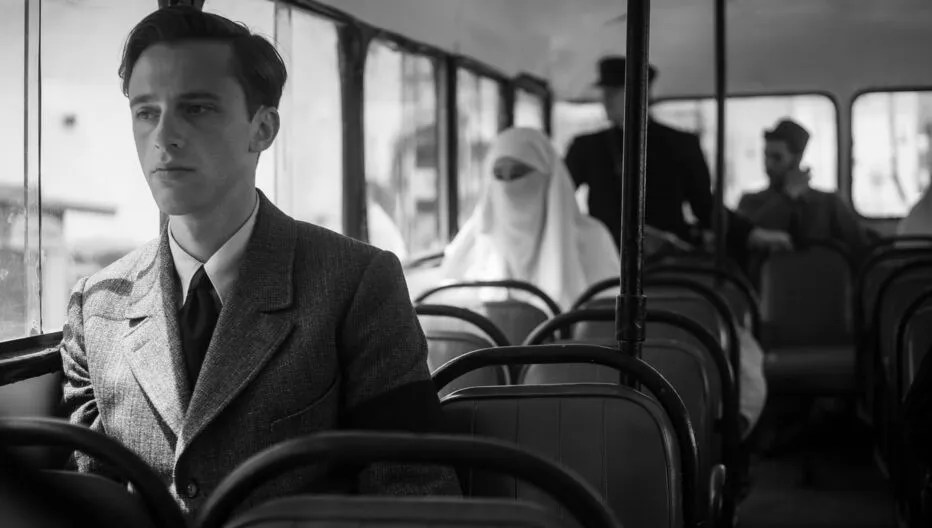

© 2025 Carole Bethuel / Foz / France 2 Cinéma / Macassar Productions / Scope Pictures / Gaumont
То, как живет Мерсо, как он ощущает себя и мир, мы видим буквально: игрой света и тени на человеческой коже. Пусть и черно-белый, фильм поражает своей яркостью, ослепительным светом солнца и чувственными крупными планами. Зритель невольно любуется героем в его повседневном существовании и словно ощущает прилипающую к телу одежду, изнуряющую ночь в богадельне, погружение в воду, зной, песок на коже… Мерсо часто находится на грани света и тени, при этом объединяя их, наполняя присутствием из плоти и крови. Музыкальное сопровождение и звук также завораживают: наполняют пространство идентичностью и настроением, соответствуя жаркому Алжиру, находящемуся на стыке культур. Контраст и смешение культур подчеркивается в фильме различными приемами: то и дело зритель слышит намаз, видит покрытых женщин, и тут же — католические похороны, французские кинотеатры, молодежь, как французская, так и алжирская, одетая на европейский манер.
Весь актерский состав «Постороннего» создает атмосферу не столько абсурда литературного, сколько абсурдности жизни. Бенжамен Вуазен же сотворяет собственный моно-спектакль, являясь центром повествования не только по логике сюжета, но и собственной актерской манерой жизни в кадре. В течение всего фильма его эмоции и восприятие резко отличаются от окружающих, он относительно равнодушен ко всему, от бытовых неудобств до отношений с людьми, ровно до того момента, когда католический священник навязчиво вторгается в его личное пространство и желает вторгнуться в сознание. После взрыва эмоций в герое что-то зажигается, зритель «переключается» вместе с ним.
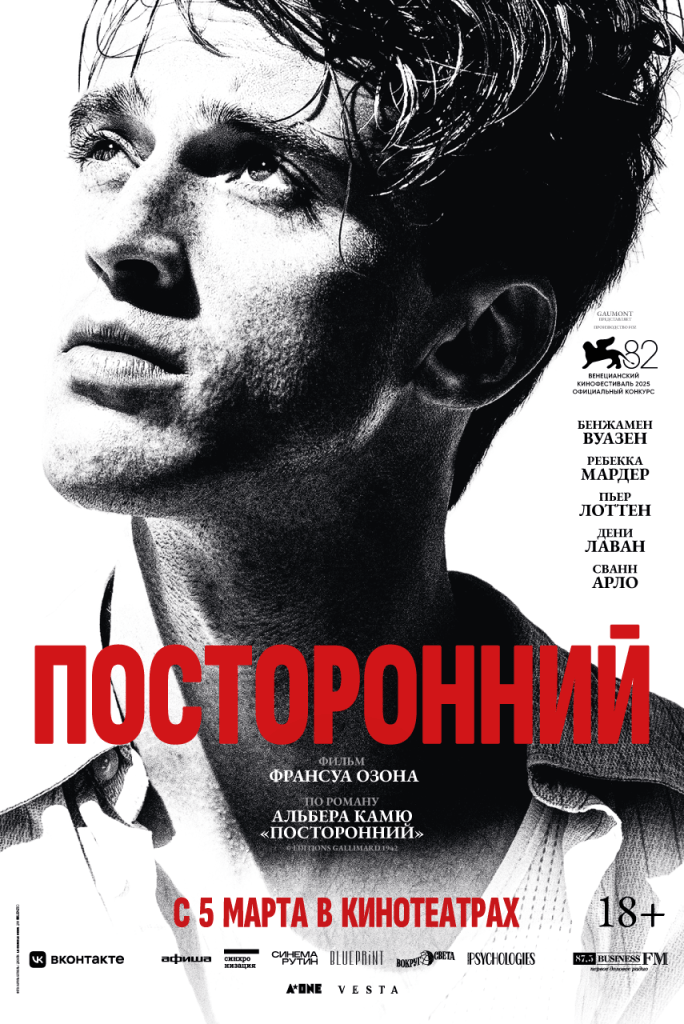
A-One Films
Словом, этот фильм — манифест французской кинематографической традиции, дань уважения кино 60-х, рассуждение о человеческой природе и отличиях, разделении на «своих» и «чужих», о нравах и предрассудках, по сей день сохраняющихся в обществе. Библейские отсылки в сочетании со смятением, приведшим к убийству, непонимание приговора не за преступление, а за несоответствие «общественным нормам»… все это делает роман актуальным уже более восьмидесяти лет, а фильм — заставляющим задумываться о внешнем и внутреннем.
***
ENG: In 1942, “The Stranger” was written by Albert Camus as part of his “Cycle of the Absurd.” This short novel is considered an illustration of the ideas of existentialist philosophy: the protagonist embodies a man living by chance, “going with the flow,” and in his own way, he is free. The novel was already adapted for film in 1967, it was Luchino Visconti‘s “The Stranger” starring Marcello Mastroianni. François Ozon cast Benjamin Voisin as his “stranger,” who was collaborating with the director for the second time.
Colonial Algeria seems to be set out of time, but the action is more likely set in the 1930s, on the eve of World War II, when colonial prejudices and societal apprehension shaped people’s lives. The film begins with a young man brought into prison. He’s clearly taciturn and doesn’t understand Arabic. But when the question “Why are you here?” is translated, he calmly replies, “I killed an Arab.”
Meursault, a thirty-year-old man living in Algiers, wakes one day to a telegram announcing his mother’s death. His perception of the world and his indifferent, emotionless demeanor shape how society sees him. Camus himself expressed the book’s premise this way: “In our society, anyone who doesn’t cry at his mother’s funeral risks being condemned to death.”
Meursault’s life, his perception of himself and the world, are seen literally: through the play of light and shadow on human skin. Although filmed in black and white, the film is striking in its brightness, its blinding sunlight, and its sensual close-ups. The viewer involuntarily admires the character in his everyday existence, feeling clothes sticking to his skin, the oppressive night in the almshouse, plunging into water, the heat, sand rubbing against his skin Meursault often dwells on the boundary of light and shadow, yet simultaneously unites them, bringing them to life in flesh and blood. The musical score and sound are also captivating, imbuing the space with identity and mood, befitting the sweltering Algeria at the crossroads of cultures. The film emphasizes the contrast and fusion of cultures through various devices: the viewer repeatedly hears prayers, sees veiled women, and then, in the same breath, sees Catholic funerals, French cinemas, and young people, both French and Algerian, dressed in European style.
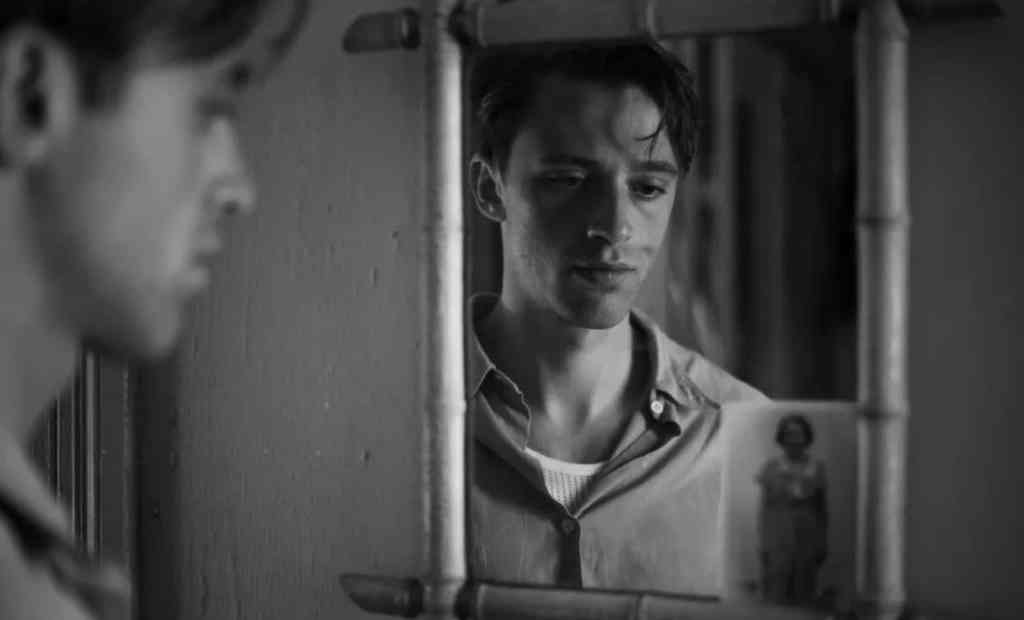
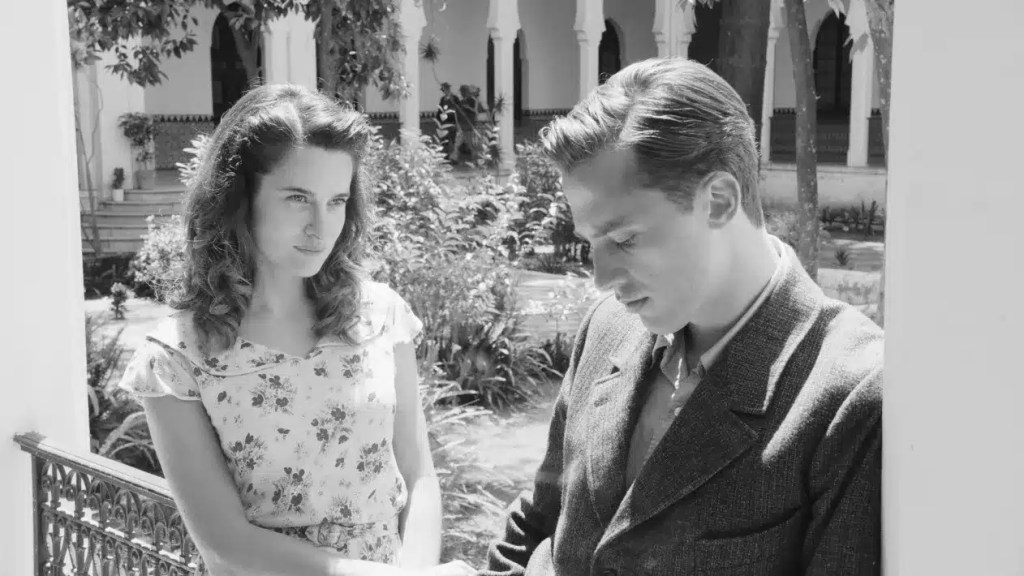
© 2025 Carole Bethuel / Foz / France 2 Cinéma / Macassar Productions / Scope Pictures / Gaumont
The entire cast of “The Stranger” creates an atmosphere not so much of literary absurdity as of the absurdity of life. Benjamin Voisin, meanwhile, creates his own one-man show, serving as the center of the narrative not only through the logic of the plot but also through his on-camera acting style. Throughout the film, his emotions and perceptions are sharply differentiated from those around him; he is relatively indifferent to everything, from everyday inconveniences to relationships, until the moment when a Catholic priest obsessively intrudes into his personal space and attempts to invade his consciousness. After this emotional outburst, something ignites within the hero, and the viewer “switches” along with him.
In short, this film is a manifesto of French cinematic tradition, a tribute to 1960s cinema, a reflection on human nature and differences, the division between “us” and “them,” and the mores and prejudices that persist in society to this day. Biblical references, combined with the confusion that led to the murder, the incomprehension of a sentence not for a crime, but for not conforming to “social norms”… all this makes the novel relevant for more than eighty years, and the film invites reflection on both the external and the internal.
Text: Julia Sumzina

 LA NOTTE MAGAZINE
Leave a comment