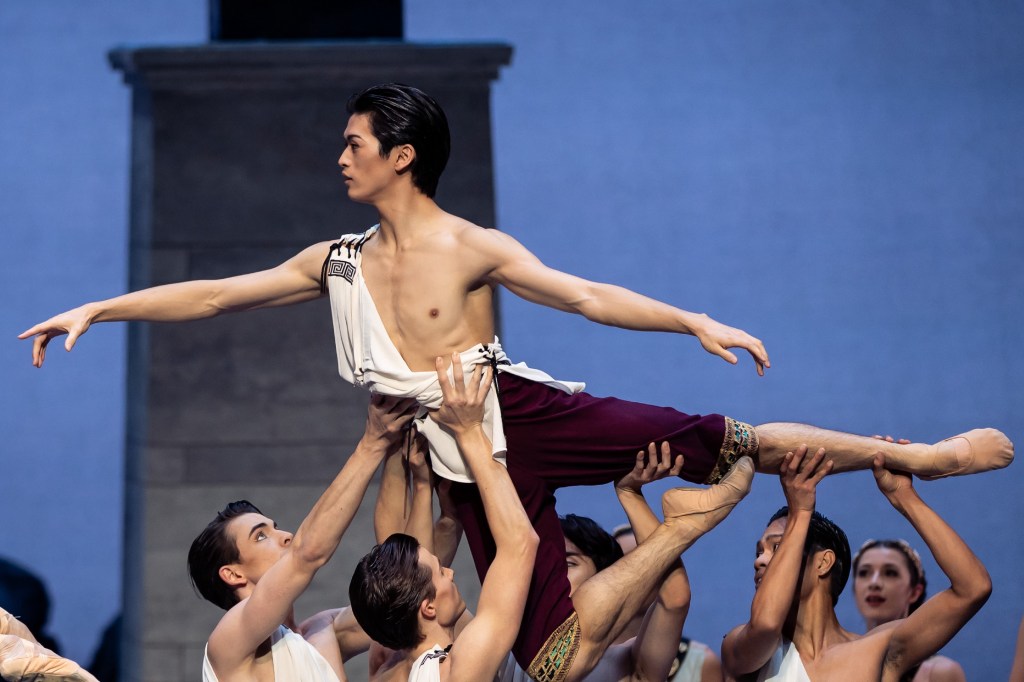
Bright and noble Kentaro Mitsumori is a Principal Dancer of the Vienna State Ballet. We have talked to him about his career path, working with such legends as Nicolas Le Riche and Alessandra Ferri, his acting onstage and inspiration.
You started this season as a principal dancer at the Vienna State Ballet. What are your first impressions of working in Vienna?
Vienna has a very particular artistic atmosphere, refined but also curious and open. From the start, I felt the city’s deep respect for classical culture and I immediately fell in love with it. In the studio, the dancers are incredibly motivated, and there is a strong sense of tradition alongside a willingness to explore. It is inspiring to join a company with such depth, and I feel both challenged and welcomed at the same time.

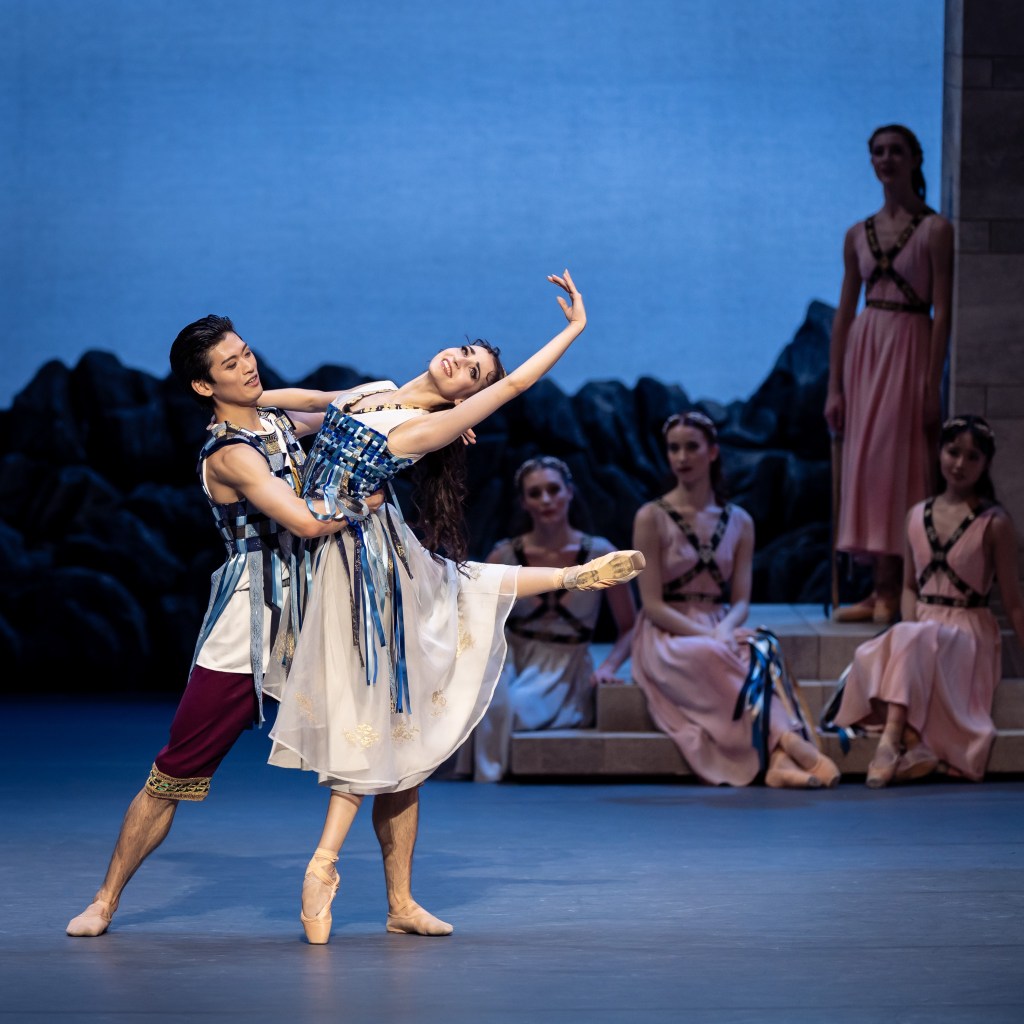
Kentaro Mitsumori and Laura Fernandez Gromova in „Kallirhoe“: Wiener Staatsballett/Ashley Taylor
You were trained at a private ballet school in Japan, then at the John Cranko School in Stuttgart, then joined the Royal Swedish Ballet, and now Vienna. How quickly do you adapt to a new country, and what is the most difficult part?
Adapting to a new country becomes a bit harder as you get older, which I think is normal. When I moved to Stuttgart at sixteen, I did not speak much English, but being young made it easier to make friends. Of course, I missed my family in Japan, but I was excited to experience a completely new world.
Moving to Sweden was different because I was not alone. I joined the company with my best friend, Madeline Woo, and we shared an apartment from the beginning. That made the transition smoother, although starting as a professional dancer was overwhelming. Suddenly, I was one of the youngest in the company, learning how to behave in a professional environment.
Now in Vienna, joining as a principal dancer brings new responsibilities and challenges. I feel older and more mature, but it is also harder to leave behind what I built in the past. Every move has been overwhelming at first, but I have learned to stay patient, observe, and adjust. Each country has shaped a different side of me as an artist.
You worked for eight years at the Royal Swedish Ballet under Nicolas Le Riche. How did this influence your development?
Nicolas taught me to think like an artist, not just a technician. He pushed me to understand why I was dancing each step, and I was eager to absorb everything he could teach. There is always more to learn, and sometimes I wish I had more time in the studio with him. Those eight years gave me a foundation and maturity that allowed me to take the next step in Vienna.
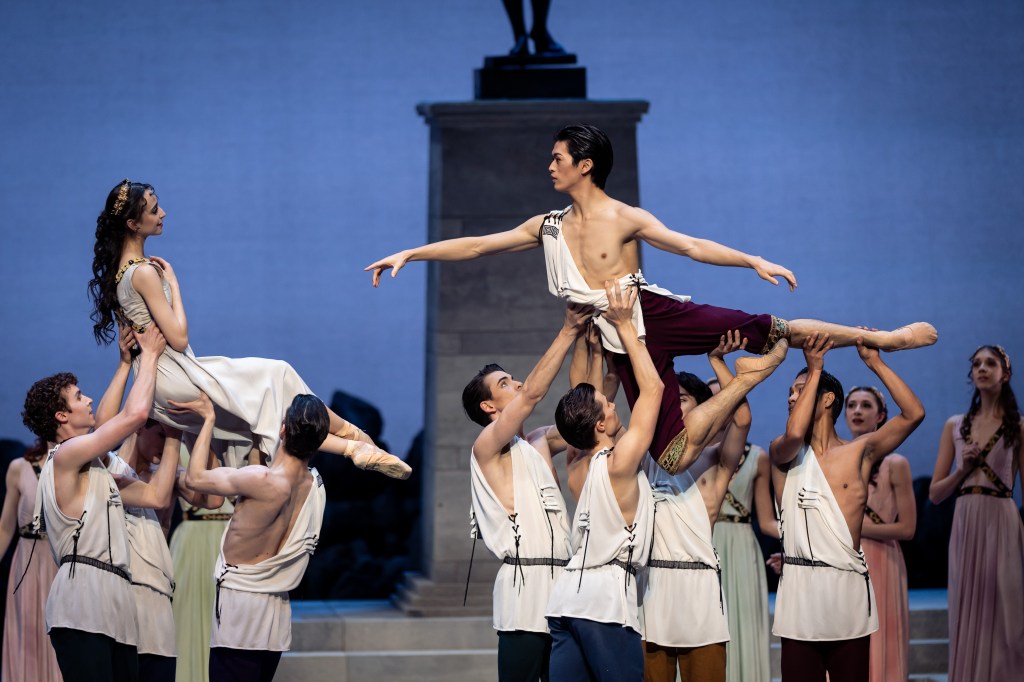

Kentaro Mitsumori and Laura Fernandez Gromova in „Kallirhoe“: Wiener Staatsballett/Ashley Taylor
The great Alessandra Ferri is now your ballet director…
It still feels almost unreal that I have worked with Nicolas Le Riche and now I am working with Alessandra Ferri. Joining a company under her direction feels like entering a completely new chapter. She brings an incredible perspective of experience, emotion, and longevity. She challenges me to connect more deeply with my characters and refine the smallest details. I feel very fortunate to work with someone whose artistry I have admired for so long.
You have danced many interesting roles. Which character is closest to your personality, and which is the most challenging?
Many of the male lead roles are not exactly like me, but if I had to choose, I would say Romeo. He is sincere and perhaps the most naive of all ballet characters, which I relate to in some ways. I loved dancing him, especially in Sir Kenneth MacMillan’s choreography. It is physically and emotionally demanding, but incredibly rewarding.
On the other hand, Nureyev’s Don Quixote is one of the most technically challenging roles in my repertoire. It is exciting to push my limits, even if it is far from my personality offstage.
Who are your role models?
Mikhail Baryshnikov has always been a role model for me; I have admired him for as long as I can remember. I also look up to dancers who combine technique with intelligence and artistry. Watching someone who can move effortlessly while telling a story inspires me to grow.
Who would you like to dance with as a partner?
I enjoy partnering dancers who are expressive and musical. I have been lucky to dance with incredible partners already. Each dancer brings a unique strength and personality, and discovering new partnerships always teaches me something about phrasing, breathing, and trust.
Your technique allows you to focus on acting. Your style is expressive and emotional. How do you prepare roles from an acting perspective?
I always start by reading the story carefully. Then I try to understand the emotional temperature of the character — what they fear, desire, or hide. Sometimes the music guides me and the emotions flow naturally. Over the years I have learned that emotion is best expressed when it comes organically through the choreography, the music, and the interaction with my partner. The more natural you are, the more the audience connects to the story.
You are into modeling. Does it help you feel more confident on stage?
It is probably the other way around. Feeling confident on stage helps me in modeling. However, modeling has taught me to use the camera the way dancers use the audience. It has helped me understand presence, angles, and how to project energy, which can translate to performance.
What inspires you?
I am inspired by beautiful work in all forms: music, art, design, film, architecture, food, and of course ballet. I admire people who strive for excellence, no matter the field. Inspiration is everywhere if you learn to notice it, and it influences the way you live and create.
Which era attracts you culturally and aesthetically?
I am drawn to the 1980s, which combined classic elegance with modern freedom. The fashion, photography, and architecture all had personality but still carried refinement. I also enjoy exploring what my parents experienced during that time. It is fascinating to see how the world looked through their eyes.
What do you watch and listen to?
I watch a lot of films, especially documentaries or anything that shows the creative process. For music, I listen to everything from classical to modern. Classical music helps me start and end my day calmly, while pop music energizes me during the day. Music is a way to reset my mind between rehearsals and performances.
How do you spend your leisure time?
I enjoy simple pleasures: cooking, walking around cities, discovering cafes, and spending time with people I care about. Quiet moments are important for me to recharge and find balance.
2025 is coming to an end. What do you wish for yourself in 2026?
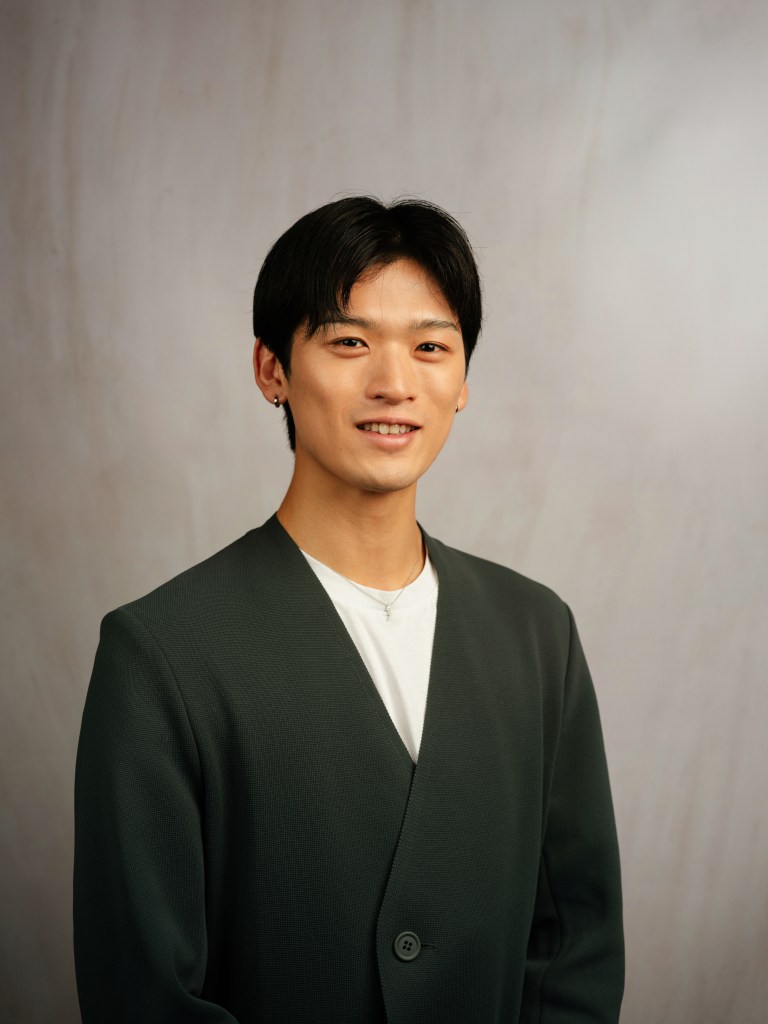
I wish for growth. I want to deepen my artistry, take on meaningful repertoire, and continue expanding my world not just as a dancer but as a person. I hope 2026 brings challenges that push me forward and moments that remind me why I love this profession.
I wish you the new interesting roles and many opportunitis for your creative development! Thank you!
Interview: Julia Sumzina
Photos: Copyright „Kallirhoe“: Wiener Staatsballett/Ashley Taylor
Copyright „Portrait“: Andreas Jakwerth
Video: Kentaro Mitsumori’s personal archive
 LA NOTTE MAGAZINE
Leave a comment