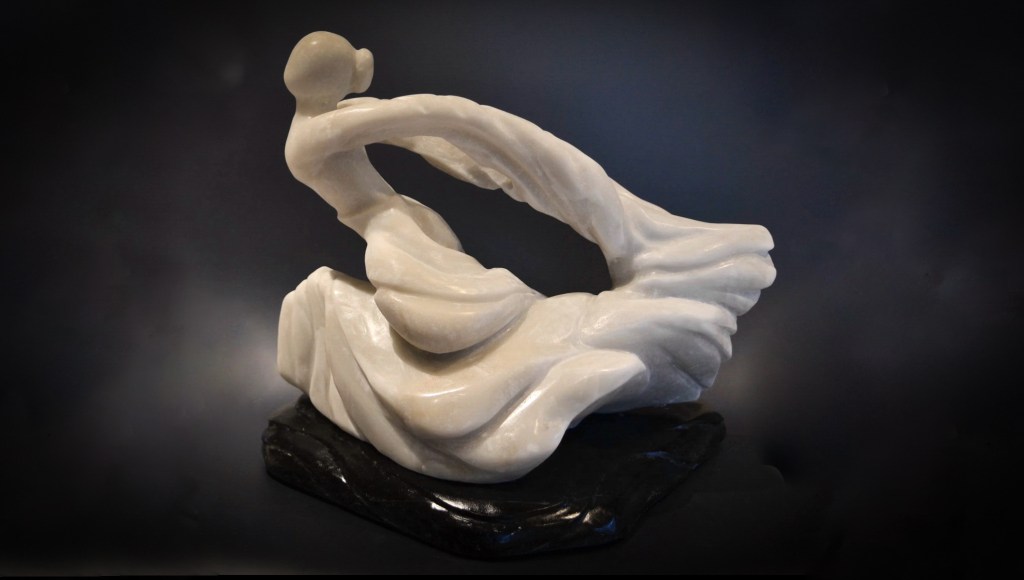
La Notte magazine’s primary goal has always been to showcase creative individuals and artists of various disciplines to the public. Today, let us introduce you to Paul Chase, a multidisciplinary artist from Galena, Illinois, and his “Stone Dancers” sculpture series.
Paul talks about himself and the art of ballet in his life:
The art of ballet is a highly technical and influential form of performance dance that originated in the Italian Renaissance and evolved into a globally recognized art form with a unique vocabulary. Renowned for its grace, precision, and elegance, ballet demands immense physical and mental discipline from its practitioners. The “Stone Dancers” sculptures incorporates these elements and creative stone carving techniques to present the beauty, the art and creativity of ballet.
I discovered I was interested in art when is was in elementary school. Other students would ask me to do their art assignments, I never did but it was an indication that I had art talent. When I was in High School my Grandfather told me I was related to the famous American Artist Georgia O’Keeffe and that she had grown up near my home in small town Sun Prairie, Wisconsin. I recently had a “Georgia O’Keeffe Tribute” art show displaying 12 large format portraits of O’Keeffe and 8 marble sculptures inspired by her.
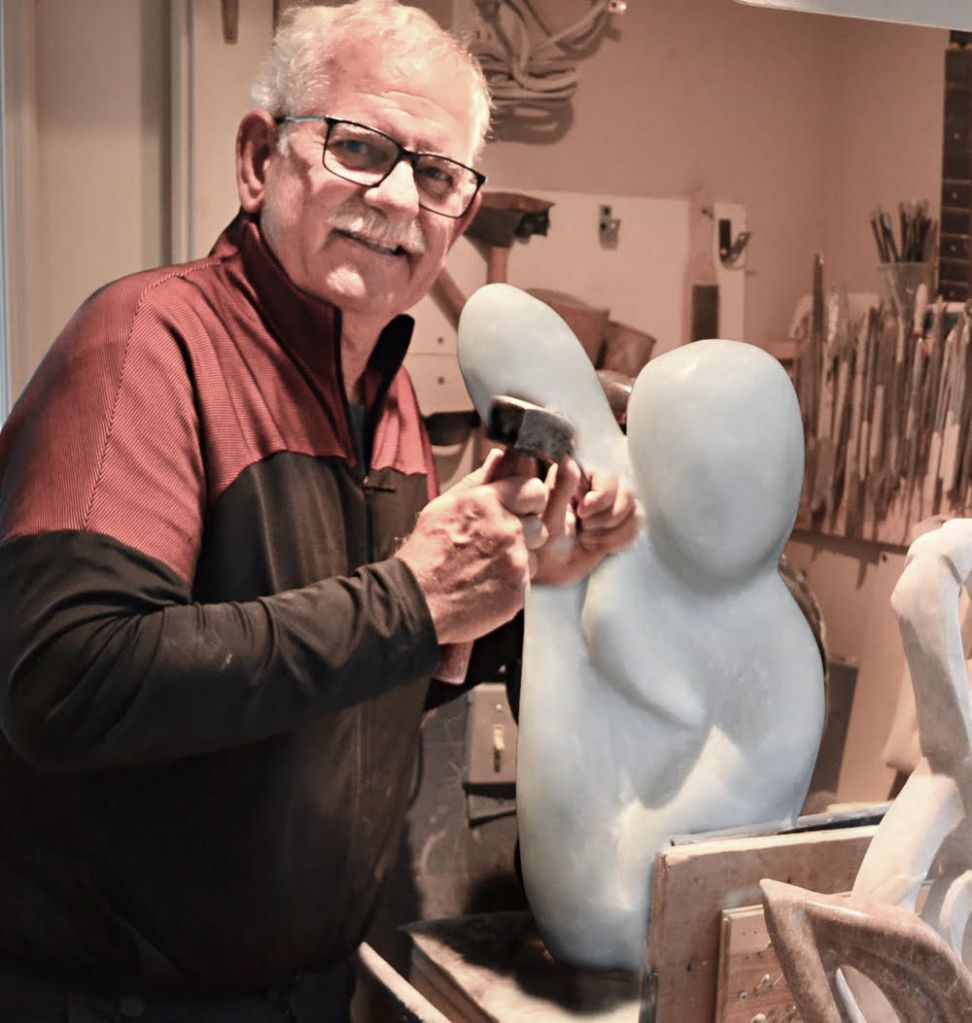
I now live in Galena, IL with my wife Mary and have a studio in our home. I keep painting and working in stone carving to allow my creative energy to develop and re develop in new ways. It is a challenge to create a “soft form” out of hard stone. I am an artist. I create. I use many techniques and many materials to express what I see, what i want others to see. I have been painting pictures for many years and developing “vision” for design and composition. I was an art teacher for 30 years. Experience is valuable in every aspect of life, but especially in creating great art.

About 20 years ago i moved from two dimensional art to three dimensional, to sculpture. I began with carving in wood. I learned right away that if you carve away too much, you can’t go back. You are able to adjust the design somewhat, or change it completely. It can be a “happy accident” and the piece develops nicely. As I moved from wood to carving stone, planning the design was more critical, but still allowing for new directions as the piece evolved.
I have collected marble from all over the country and have a wide array of marble boulders and pieces outside my studio in Galena, Illinois. Part of the creative process for me in stone carving is allowing the stone to ‘speak to me,’ or tell me what it wants to be and then guide me through the designing and carving. It’s similar to painting in that way. One day, I looked at the large red marble chunk of stone, and it was obvious it would become a horse head. Another day I “see” a treble clef or a ballet dancer.
I often get inspired directly from a rock, sometimes suddenly “seeing” what is inside the rough form, or the rock “shouts out” what it wants to be. But sometimes the opposite happens, too: Instead of the stones speaking to me, sometimes it’s the curvature of the dancer, geometric design of the muscles, bone structure and the gown to create a beautiful, almost abstract sculpture, displaying the mystique and beauty of ballet, enhanced by the colors and textures of the stone.
Starting out, I stuck to the traditional method of stone carving, using hammers, chisels, files and sandpaper, which dates back to artists like Michelangelo. As my style progressed, I started using modern day power tools as well, allowing me to work quickly and creatively, enhancing the stone sculpting adventure.
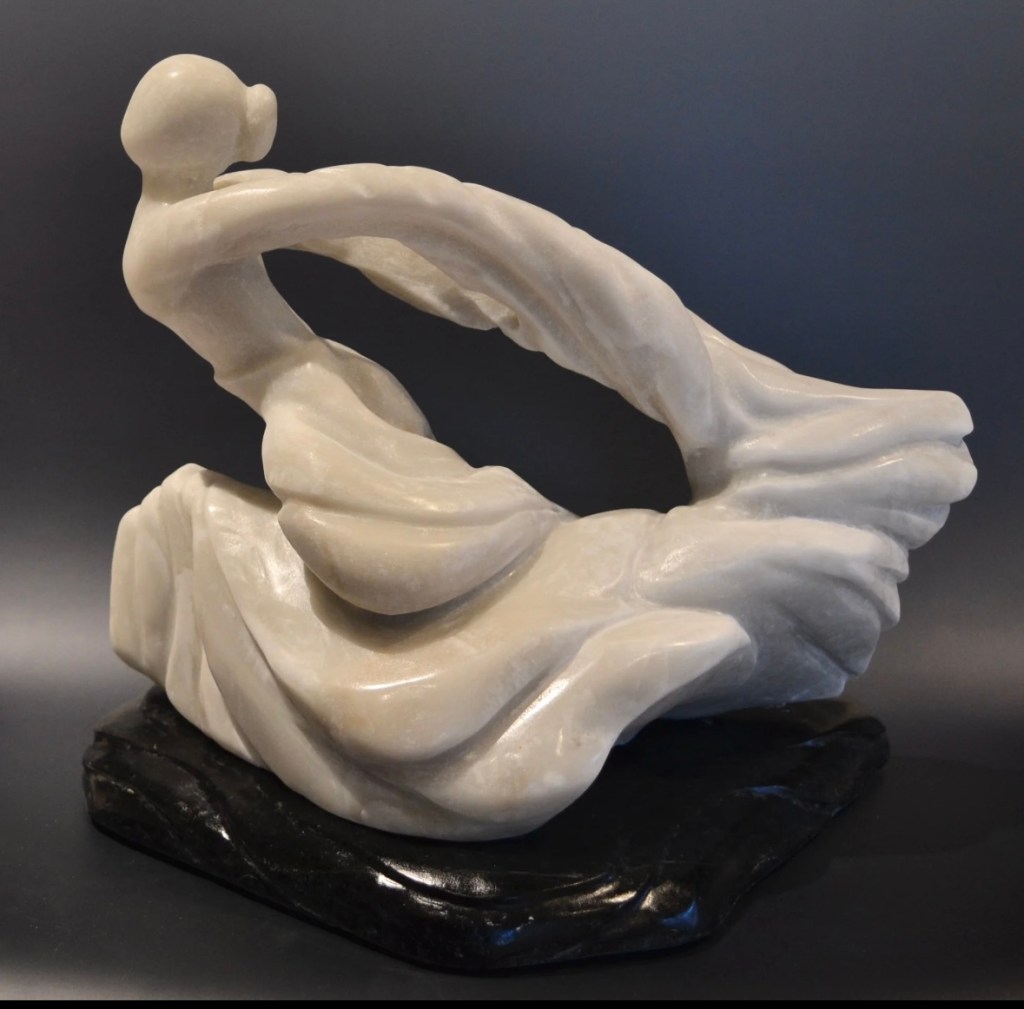
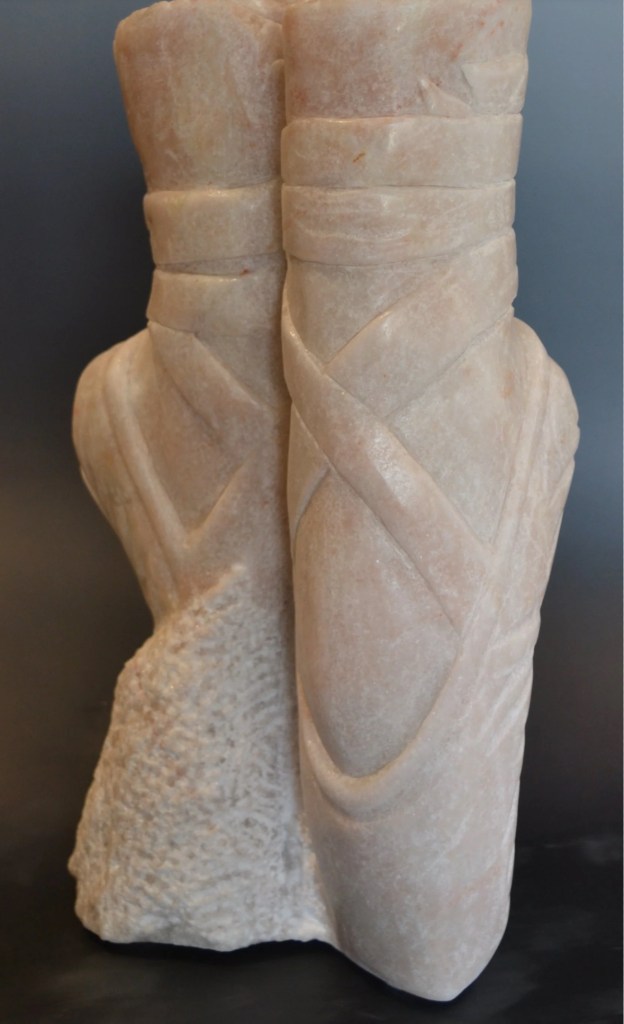
I love to learn new methods and have new subject matter for the marble sculptures. I have always played guitar and created many guitar inspired marble sculptures, but in the last 15 years I have entered the realm of classical music, symphony and ballet. The passion to create designs, paintings and sculptures in the theme was born. I took a new look at the art of ballet, the movements, the shapes, the intensity of the dancers, the flow of the stage, the sounds of the music and the composition of the big picture. Also, I began to focus on details of costumes, dancers makeup, hair style, and the shoes. Now, try carving those out of stone.
The arms and legs of ballet dances cannot be successfully carved from stone. Each stone is different in hardness, strength to hold details and of course color. When carving, sometimes the stone cracks and breaks. That sends a “shock” though the artist. First, panic, disappointment, anger, and general “freaking out” happens. I take another look and evaluate the damage. Sometimes it’s minor, and small changes in the overall design will rescue the sculpture. Sometimes a major crack or break may require a complete end of the piece and another rock must be selected…and start over the work. Several times I have finished a sculpture only to have it fall off the work bench and shatter, causing another “freak out” adventure.
One time I had worked many hours on a giant treble clef carved from Tennessee pink marble. It was a beauty. It fell off the bench and hit the concrete floor and shattered into many pieces. I sent a picture to my son so he could cry with me, and replied “No, do it in Kintsugi!” What? He told me that it is the Japanese art of putting broken pottery pieces back together with gold – a metaphor for embracing your flaws and imperfections. I researched the methods and designs and decided to “renew” the treble clef with gold crack lines. It was amazing, beautiful and a new kind of meaning for music and art… “embrace your flaws and imperfections and create with them.” I have since used this method on other marble sculpture that have cracked or broken. Often times enhancing the piece with other engraved crack lines filled with gold.

As I continue to create new marble carvings inspired by music, ballet and dance I look for stones that will emphasize movement and abstract elements. I have taken sculpture that I had completed years ago and “re-designed” them into a dance composition. Re-design in stone sculpture of course means hammering, chipping, grinding, sanding and polishing. It seems like the stone speaks to the artist and suddenly says it wants to dance.
Paul’s personal website: www.paulchase.com
The photos are from Paul’s personal archive.

 LA NOTTE MAGAZINE
Leave a comment